
Why Some Messages Stick—and Others Don’t

Why do some brand messages inspire action while others are forgotten within minutes? The answer lies in the power of storytelling. More than just a marketing tactic, storytelling is a science-backed strategy that engages emotions, builds trust, and drives action. Whether you are running a business, a nonprofit, or a global brand, your success depends on your ability to connect with people in a meaningful way.
Research in neuroscience, psychology, and consumer behavior proves that storytelling is the most effective way to capture attention, create emotional connections, and inspire action. But why does storytelling work so well? In this post, I dive into the science behind storytelling, highlighting why every organization, no matter how big or small, should integrate compelling narratives into its brand strategy.
The Neuroscience of Storytelling: Why It Captivates the Brain
When we hear a compelling story, our brains do not just process the information shared—we experience it. Unlike facts and figures, which only engage the language-processing areas of the brain, stories activate multiple brain regions, including those responsible for sensory experiences, emotions, and decision-making.
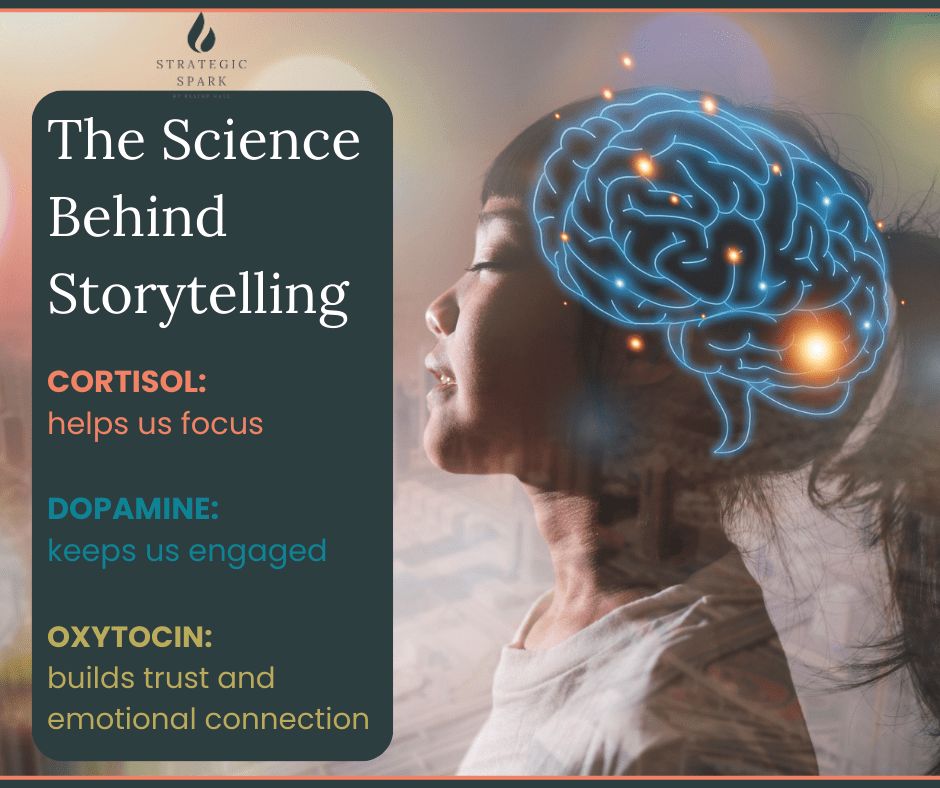
The Brain Chemistry of Storytelling
- Cortisol: helps with focus and memory retention, making the message stick.
- Dopamine: creates engagement and anticipation, increasing emotional investment.
- Oxytocin: enhances trust, empathy, and connection, making people more likely to take action.
According to neuroscientist Dr. Paul Zak, oxytocin levels rise when people hear emotionally compelling stories, increasing their trust, generosity, and willingness to take action (Craig Friedman, 2022). This is why a powerful TED Talk, a viral campaign, or a brand origin story can leave such a lasting emotional impact—our brains chemically reward us for engaging with the narrative.
Humans are naturally wired to process and retain information through stories. Long before written language, we relied on oral storytelling to make sense of the world, share knowledge, and build community. This evolutionary trait explains why storytelling is still our most powerful tool for influence and persuasion today.
- Stories are 22 times more memorable than facts alone.
- Emotional stories increase information retention by 65% compared to strictly fact-based content (George Affleck, 2024).
This is why we often forget data-driven presentations, but vivid personal anecdotes stick with us for years.
The Persuasive Power of Storytelling
Beyond making messages more memorable, storytelling is also a powerful tool for persuasion. Stories tap into our emotions, shaping our attitudes, beliefs, and decisions in ways that facts and data alone cannot. By creating empathy, tension, and resolution, storytelling influences how people perceive a message and whether they feel compelled to take action. Science supports persuasive power in the following scenarios:
- The “Identifiable Victim Effect”: People are more likely to take action when they emotionally connect with a character (i.e. people, animals, etc.), rather than abstract numbers.
- The Hero’s Journey Framework: This universal storytelling structure (used in everything from ancient myths to Hollywood films) creates emotional buy-in by guiding the audience through a problem, a struggle, and a resolution.
- FOMO and Anticipation: Stories create dopamine-fueled engagement by introducing conflict and resolution, making audiences eager to discover what happens next.
This is why marketing campaigns, fundraisers, and brand stories use real people’s experiences instead of just explaining a product or mission. Evoking emotion often leads to action whether that’s donating to your cause or purchasing your product or serve.
The Business Case for Storytelling: Why Every Brand Needs It
No matter the industry, organizations that embrace storytelling consistently outperform those that do not. Data shows that story-driven branding increases engagement, trust, and conversions.
- 86% of consumers prefer brands that tell authentic stories (Forbes, 2023).
- 55% of people are more likely to buy from a brand whose story they connect with (PlayPlay, 2023).
In a 2023 trends report on the impact of storytelling, Tumisang Bogwasi found that 55% of consumers are more likely to remember a story than raw data, 68% say brand stories influence their purchasing decisions, and companies that invest in compelling storytelling see a 20% boost in customer loyalty.
How to Implement Effective Storytelling in Your Brand Strategy
Whether you are an entrepreneur, nonprofit leader, or marketer, your storytelling should make your audience feel something—emotion drives action! Here are some strategies to consider.
- Make Your Audience the Hero: Use the Hero’s Journey framework to create narratives that position your audience as the central character.
- Use Emotion, Not Just Information: Focus on people, struggles, and transformation instead of just presenting facts.
- Show, Don’t Tell: Use sensory details and personal experiences to create vivid mental imagery.
- Leverage Visual Storytelling: Pair narratives with videos, images, and testimonials for maximum impact.
- Stay Authentic: Consumers can sense inauthentic storytelling—be genuine and authentic to your mission.
(Learn more about these strategies, including examples, in next week’s post: “5 Storytelling Techniques to Make Your Brand Narrative Unforgettable”)
Every Organization Needs Storytelling
Storytelling is not just a content strategy but a fundamental (and memorable) human experience. Storytelling is your most powerful tool to engage, persuade, and inspire action.
Are you ready to elevate your brand with a compelling storytelling strategy? Let’s uncover your most powerful story, refine your message, and create content that truly resonates.
Contact me today to start transforming your message into a story that leaves a lasting impact.

 Strategic Spark Consulting
Leave a comment